Does a Baby Sleeping on Side Really Cause Sids
Story highlights
- Baby sleep is best if you play loud, rumbly white dissonance during all naps and nights
- An unswaddled baby tin can roll to an dangerous position more easily than a swaddled one
(CNN)We demand more training to go a driver's license than to become a parent, in our culture. Fifty-fifty though we would benefit from parental education, some of us have never fifty-fifty held a newborn before having one of our own. And nosotros often rely on advice from friends and family, much of it outdated or just plain wrong.

When information technology comes to babe sleep, bad advice tin be unsafe. October is Safe Slumber Awareness calendar month, an opportunity to learn more than about sudden unexpected infant death and debunk the myths nigh what is sabotaging your sleep and highlight habits that potentially run a risk your baby'south safety.
Myth 1: Your baby sleeps all-time in a silent room.

Not true. In fact, total silence can make it hard for your baby to doze off. Retrieve, the womb is noisy: louder than a vacuum cleaner and running 24 hours a twenty-four hour period. For nine months, your niggling one's been lulled to sleep by the rhythmic whooshing of the blood flowing through the placenta. To her, the tranquility of the boilerplate habitation is jarring. Plus, in a silent room, she's more than likely to wake up when a loud truck on the street or whatever other bump in the night breaks that silence. The truth is, your baby will sleep best if you lot play loud, rumbly white noise during all naps and nights.
Myth ii: You lot should never wake a sleeping baby.
Nope. Y'all should ever wake your sleeping baby using a footling technique chosen "wake and slumber." Information technology gently teaches your child the important skill of self-soothing. Here'southward briefly how information technology works: Starting every bit early on equally the offset 24-hour interval of life, wake him up the tiniest fleck after sliding him into bed. Simply tickle his neck or anxiety until his optics drowsily open. Very soon after, he'll drift correct back into slumberland. In those few semi-awake seconds, he's just soothed himself back to sleep -- the first step toward sleeping through the night.
Myth 3: Some babies sleep worse when swaddled because they want to be gratis.
Not really. Your baby may fuss and resist swaddling at first, so it may look like she hates information technology. Simply babies don't demand freedom, they need the feeling of security they had in the womb. Without wrapping, your infant will flail her arms, whack herself in the face and startle easily throughout the night. That'south a recipe for poor slumber.
Swaddling is the first pace to calming, and it'southward important yous don't stop in that location, specially if your infant's been fighting it. To help her settle, you'll want to layer in other womb-mimicking steps: "shushing," side/tum position, swinging and sucking, which, along with swaddling, brand upward the 5 S'due south of setting upwards a baby for sleep success. And in one case the Due south's become role of your sleep routine, she'll surrender her battle! (Notation: Side/tummy position is for calming merely, never for sleep.)
Myth 4: We should teach babies to sleep in their own rooms.

Having our babies abound up to exist contained takes a long fourth dimension. There's no need to blitz information technology. In fact, having your new child sleep in another room is inconvenient (for feedings and diaper changes) and perchance dangerous. The American Academy of Pediatrics recommends that babies sleep in the parent's room for at least vi months (e'er on their back, in their own bed). The simple exercise has shown to significantly reduce the rate of sudden infant decease syndrome.
Myth 5: Swaddling should be stopped after ii months.
Swaddling reduces crying and increases sleep. But new research shows that swaddled babies who whorl to the stomach take double the risk of SIDS compared with an unswaddled baby rolling over. Every bit a event, the pediatrics academy is at present recommending that parents end baby-wrapping at 2 months. On the face of it, the group'south new advice seems to make sense, but it completely ignores the risks of not swaddling.
In an 8-yr review of data collected by the Consumer Production Rubber Commission, only 22 sudden unexplained babe deaths related to swaddling were reported; near fifty% were in sleep sacks (a wearable blanket), and 90% were constitute on the stomach and/or with bulky bedding. (Note: Fatalities categorized as sudden unexplained infant expiry include sleep deaths from adventitious suffocation, strangulation and SIDS.)
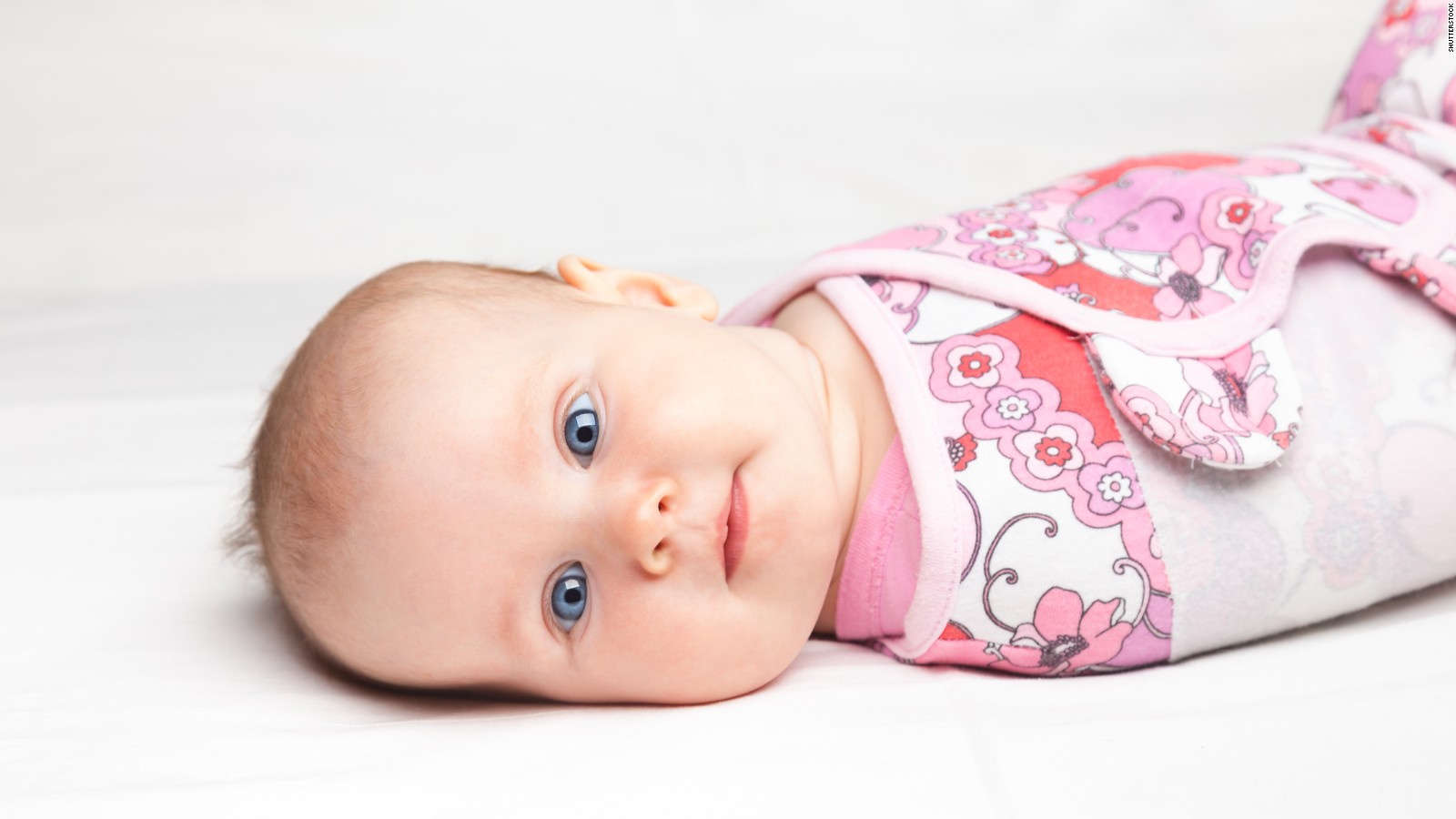
During those eight years, hundreds of thousands -- if not millions -- of babies were swaddled. Since sudden unexplained infant decease strikes one in one,200 babies, one would have expected hundreds or possibly thousands of swaddle-related deaths over this period if wrapping caused these deaths. Of note, during the same eight years, i,026 deaths related to sofa sleeping were reported to the safety commission.
The point is, though swaddling may innovate a theoretical chance, there is non a lot of proof it is causing a true increase in sudden unexplained infant expiry. On the other hand, swaddling has been shown to reduce baby crying and heave sleep. That is of critical importance because the stress provoked by persistent fussing and parental exhaustion is a potent trigger for postpartum depression, child corruption, car accidents and fifty-fifty risky sleeping practices, which are associated with up to 70% of all infant slumber fatalities.
We don't want babies rolling over swaddled, simply we also don't desire them rolling over unswaddled during the ii- to four-month-old pinnacle menses for SIDS. An unswaddled baby tin roll to an unsafe position more than easily than one whose movement is restricted by snug swaddling. And, since swaddling improves sleep, unwrapped babies wake more frequently and are more probable to tempt their tired parents to fall asleep with them in their beds.
To solve this tricky problem, I assembled a team of MIT-trained engineers and renowned industrial designer Yves Behar to invent a blazon of swaddle that keeps sleeping babies safely on the back. In Oct 2016, my visitor Happiest Baby debuted Snoo, the world's first responsive bassinet that employs this special swaddle, which clips to the base of the bed to prevent rolling. This innovation allows parents to reap the substantial benefits of swaddling for a full half-dozen months without any of the risks.
Myth 6: Putting babies to sleep on the dorsum has solved SIDS.
The National Institute of Wellness-led Back to Sleep entrada quickly reduced sleep deaths from five,500 in 1994 to 3,500 in 1999. All the same, for the past 17 years, progress has completely stalled. The tragic truth is that 3,500 infants dice during their slumber each and ever twelvemonth. Although more babies are sleeping on the back, the rate of accidental suffocation and strangulation infant deaths has quadrupled since the mid-1990s. What's behind this alarming tendency? Unsafe sleeping practices. Seventy pct of all sudden unexplained infant death victims are found in adult beds, sofas and other risky locations.
A recent study revealed that while most parents fully plan to follow the ABCs of safe sleep (Alone, on the Back, in a Crib), less than half really do it. And past the end of the night, almost 60% of babies have migrated from their bassinet to their parents' bed, according to a written report in the Journal of Clinical Lactation.

The terrible, unintended consequence of the Back to Sleep campaign is that it has worsened infant sleep. Babies just don't sleep well on their backs in nevertheless, tranquillity cribs. And every bit discussed in myth 5, when babies don't sleep well, parents resort to bed-sharing, which leads to many more infant suffocation deaths.
It is very of import that parents go on to place their babies to sleep on the back, only they also need to beginning using more tools to improve their child's sleep. The good news is that there are iii effective ways to boost sleep for back-sleeping babies: sound, swaddling and rocking.
Rumbly white noise is inexpensive and very effective for improving a baby'due south sleep. Snug swaddling is as well, simply every bit explained in a higher place, pediatricians now recommend that parents stop wrapping at two months old. Motility, or swinging, is as well great, but the American Academy of Pediatrics has constitute that sleeping in sitting devices, such equally rockers and swings, may allow a baby's head to ringlet forward and cause accidental suffocation and death.

These are problems nosotros sought to address with the Snoo bed. It allows for safe swinging (it is totally apartment), safe swaddling (the baby tin can't curlicue over) and safe sound, every bit the sound increases when a baby cries but then immediately softens -- afterward the infant calms -- for all-night sleep promotion. We designed information technology to evangelize the right level of womb-like stimulation that is right for whatsoever particular baby to at-home his or her fussing and boost sleep.
For nigh twenty years, despite enormous public wellness educational programs, we have failed to reduce infant slumber decease. Just, by focusing on sleep efficacy (boosting a baby's slumber), we now accept a very exciting means to prevent many -- if not virtually -- of these deaths. And as a wellness bonus, improving slumber efficacy may also allow us to reduce other serious and unsolved health problems triggered by exhaustion and crying, such as postpartum depression (with most a half million cases diagnosed a year) and shaken-babe syndrome (1,300 incidents a year).
Please bring together me in Oct -- and all year long -- by telling new parents about burnout'south function in sudden unexplained babe death and by sharing the slumber-boosting tips mentioned here. I am confident that nosotros will dramatically ameliorate the health of American parents and babies as we put more energy and emphasis on helping parents promote better baby slumber.
Source: https://www.cnn.com/2017/10/30/health/baby-sleep-myths/index.html
0 Response to "Does a Baby Sleeping on Side Really Cause Sids"
Post a Comment